
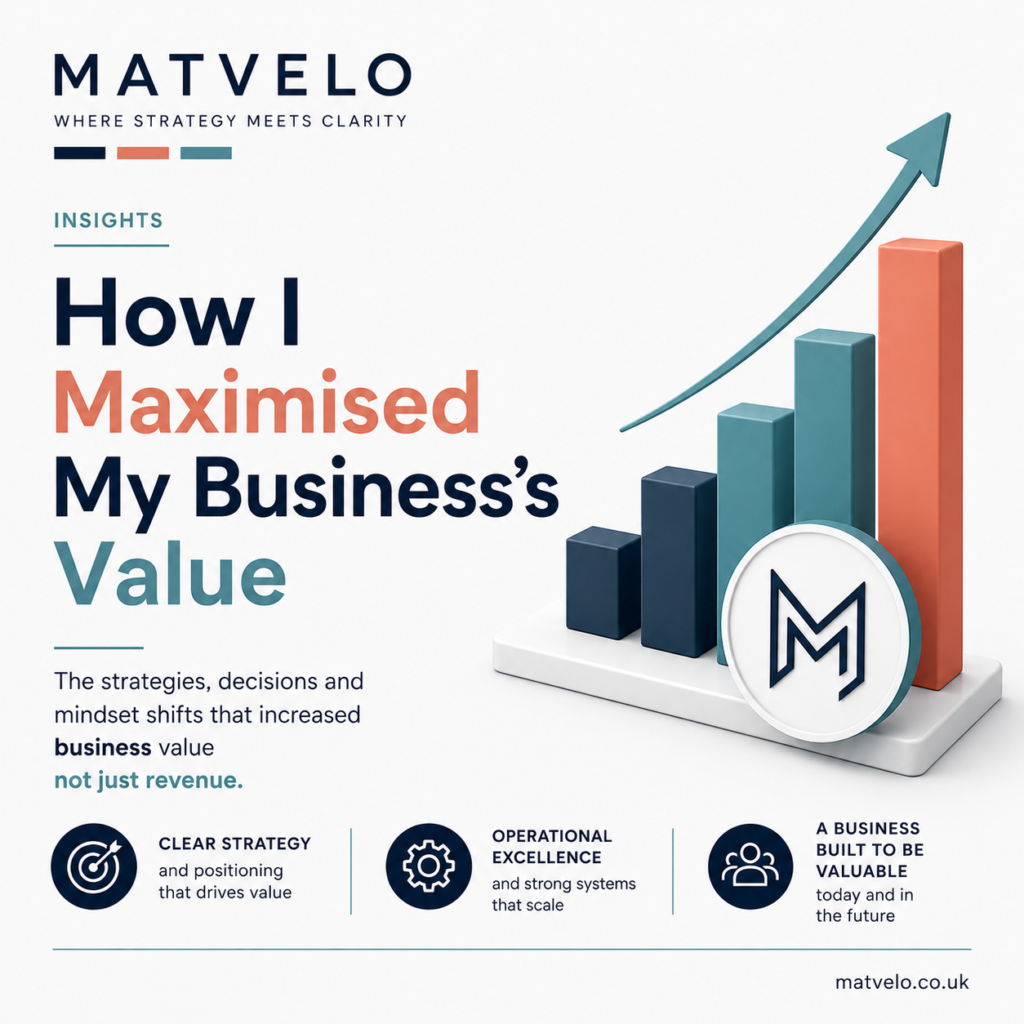
When I look back at building my first business, I can see now how much value I left on the table simply because I didn’t know any better. I thought being busy meant the business was healthy. I thought demand equalled value. I thought saying yes to everything was the right thing to do. It wasn’t.
The real shift happened when we finally recruited a few key operational employees and I could step back from some of the day‑to‑day operations. Around the same time I joined the Goldman Sachs 10,000 Small Businesses Growth Programme, this was the first moment I started viewing the business as an asset rather than a job. Being surrounded by other SME owners facing the same challenges and the same “I’m too busy to think” mindset forced me to lift my head and think differently. Strategy, future planning, business value… all the things I’d been too buried in operations to consider suddenly became non‑negotiable.
It wasn’t instant but overtime I changed how I operated, my role and my focus and once that happened, everything shifted. We started to build differently, with a focus and leadership.
Yes, we still had challenges as every SME owner experiences but with better structure, clearer roles, and the growth plan as the bible, the focus changed.
We improved service packages and payment plans with a strong recurring revenue model.
We focused on client retention instead of constantly chasing new work.
We rebuilt our pricing strategy so margin wasn’t guesswork.
We tightened operational systems so delivery was consistent, not dependent on individuals.
We recruited better; deliberately, not reactively.
We invested in culture so people wanted to stay and grow with us.
We created structure that could scale big, not just survive the next busy season.
It was a complete shift in how the business ran, how it felt, and how valuable it became. And none of it would have happened without stepping back and learning to think like a founder building an asset, not a founder sprinting to keep up.
The result; a private equity sale 8 years after our first growth plan.


Leave a Reply